10 Golden Buzzer Auditions That Changed Everything
There is a moment on talent shows when everything stops. A judge reaches across a table, a palm slams down, and gold rains from the ceiling. The Golden Buzzer isn’t just a shortcut to the next round; it’s a declaration of belief. In a single second, a performer’s life can change. This video gathers ten such moments from across the Got Talent universe, a tour of shocks, tears, laughs, and pure catharsis. Together they form a map of what moves us: honesty, craft, risk, and the courage it takes to tell the truth into a microphone.
These auditions come from different countries and different stages, but they share a pulse: the sense that we are watching a story click into place. Some are immaculate vocals that blow the doors off a theater. Others are quiet revelations of character. A few are gloriously divisive, testing what entertainment can be. All of them, in their own ways, earn that sudden eruption of confetti.
The hidden voice steps into the light
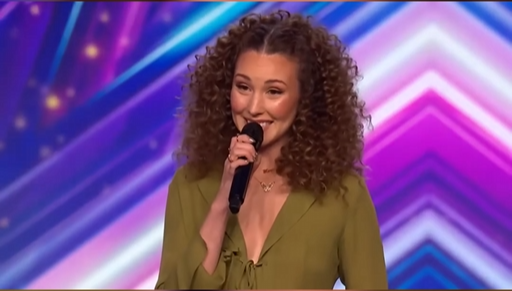
She walked out to polite curiosity and left with something closer to myth. Lauren, a singer from Brooklyn, carried an open secret. “I think some of you guys have actually heard my voice, but you don’t know my face,” she told the panel. Then she said the thing that made the room lean forward: “I sang the song Never Enough on The Greatest Showman.”
In a few sentences, she reframed a global hit. “I was hired to do the reference vocals for the actresses so they could learn the songs,” she explained, crediting the film’s star who suggested the voice should remain hers. Why the detour through anonymity? “I was more comfortable singing behind the scenes,” she admitted, before adding the turn that brought her here: “I feel kind of like the song was meant for me, and I’m kind of ready to put a face to the song.”
When she finally sang, it felt like closure for her and a reveal for everyone else. One judge struggled for comparisons. “It feels like a superstar’s arrived,” they said, calling it “otherworldly.” Another offered the perfect benediction for a vocalist who had stepped out from behind a movie screen: “Timing in life is everything, and this is your moment now.”
A brother in the wings, a voice at center stage
Callum arrived quietly. He was introduced with a jolt of familiarity: “You’re Callum, Jade’s brother. Are you okay?” The exchange nodded to a backstory of family support and a sibling’s dashed hopes. Then came the choice of song, as intimate as a diary: a slowed version of Robyn’s heartbreak anthem.
He didn’t need fireworks. A single line held the room together—
“I’m in the corner, watching you kiss her.”
That one sentence told an entire story. His phrasing was patient, the spaces between notes full of courage. The Golden Buzzer that followed felt less like a stunt and more like a rescue—of a voice, of a dream, of a kid who had watched from the wings and finally took his place onstage.
“Hopeful,” and heard
Two schoolboys stood shoulder to shoulder and built an anthem out of pain. The rapper spoke first. “I started rapping because I went through a very hard time in primary school. I was getting bullied.” The words ran ahead of the beat—funny, unscripted, beautifully earnest. Then the music hit, and the hook sounded like a promise they were making to themselves in public.
“Yes, I am hopeful for today.”
The judges didn’t mistake sincerity for sentimentality. “For two young kids like yourself to come out and sing about something that really affects you, do it in a style that’s completely yours is a really rare thing,” one said, before landing the punchline every kid who has ever felt small needed to hear: “That’s why you got that Golden Buzzer today.” Another judge confessed, “I listened to every word,” then ventured a prediction: “I think that record could be a hit.”
It already was in the room. Their chorus turned a theater into a refuge. They wrapped the moment by thanking the crowd, but the gratitude ran two ways—an audience thanking two teenagers for speaking out loud what so many had felt in quiet.
When audacity gets the gold
Not every Golden Buzzer crowns a classic vocalist. Sometimes it rewards unfiltered personality. Enter Christian, a London waiter with a showman’s swagger and a pop star’s daydreams. “I wanna be become a superstar,” he said, unapologetically. “Why not can I be friends with Rihanna, with Lady Gaga, with Beyoncé?” He loved the boots. He loved the stage. He loved the idea of himself on a billboard and wasn’t afraid to say it.
The performance split the panel, and then, in a decision that seemed to ricochet from the judge’s chair to the back row, the Golden Buzzer went off. The room erupted, but not everyone was convinced. Someone blurted the bounciest critique of the night: “What the bloody hell did you do that for?” Another judge answered with a credo that applies to every confetti shower: “We have to press the buzzer when we really believe in something.”
Christian promised to “work very hard.” You didn’t have to love the number to admire the nerve. The Golden Buzzer was a dare: make your case live, under bright lights, and let the audience decide if audacity is its own kind of talent.
A one-woman soundscape from Canada
She introduced herself simply. “I’m an entertainer,” she said, then clarified with a tilt of mischief: “I like making noise. Making noise.” Before a note—or a noise—she set a theme that could have headlined the whole showcase. “We can achieve the impossible, if we believe in it.”
What followed was less a song than a world built out of breath and imagination. She stitched together beats, voices, and comic timing, a sampler’s mind without the sampler. The panel sat back, smiling like kids in a Saturday matinee. One judge shook their head in wonder. “You said you were a noisemaker, and I was like, what does that mean? You are more than a noisemaker. That was absolutely outstanding.” Another put words to the collective bewildered joy: “I don’t know what I just watched. I don’t know what I just heard, but I know it came from Canada, and I know that it’s great.”
When the gold fell, it felt like a vote for originality itself. Later, when asked what she was, she grinned. “My job is a imitator, comic stand up, and noisemaker.” On this stage, that was more than enough.
A caregiver with a stadium voice
In a quiet corner of Quebec, a palliative-care attendant named Jeanick spends her days with people at the end of theirs. She arrived with a gentleness that filled the room. “I sing for you today,” she said, almost apologetic. Then, with clear pride, she introduced her family: “My two children have Down syndrome,” she explained, calling their extra chromosome “wonderful.”
Her interview landed like a hug. “They have so much love in their heart,” she said. “He helped me to stay in the moment. It’s fantastic.” When she sang, the contrast took the breath out of the hall. A caregiver’s life, a superstar’s sound. A judge put words to it in a single, perfect sentence:
“This is exactly what this show is about.”
Another followed: “You have so much talent. That was incredible.” It’s easy to flatten stories like hers into inspiration, but what made the buzzer feel earned was the craft—phrasing that carried a lifetime of small mercies, technique sharpened in the margins of long days, and a presence that turned a competition stage into a sanctuary.
Hands that sing
Every few seasons, a group comes along that changes the way a theater listens. A choir formed around a sibling who once struggled to communicate did exactly that. They taught friends and neighbors to sign, then brought that living language to a song about belonging. The performance was a surge of sound and motion—voices rising while hands traced meaning in the air.
It wasn’t just inclusive; it was inventive. The arrangement made space for different abilities to shine without compromise, turning access into artistry. When the Golden Buzzer landed, it stood for something bigger than a win. It recognized a community that had taught itself a new way to speak—and invited the rest of us to learn a few words, too.
Three years old, and already a headliner
Some Golden Buzzers feel inevitable the second the contestant walks out. Others sneak up on you. The toddler at the turntables did both. South Africa’s youngest DJ ambled to his rig, barely big enough to see over it, and then lit up the room with timing and instinct that seemed impossible at his age. If you’d told the crowd they were watching a decade-long residency begin right there, they might have believed you.
What made the moment special wasn’t novelty; it was command. Beats rose and fell on cue. The drops landed. The audience—an ocean of adults—followed a three-year-old’s lead. By the time the gold flew, it felt less like a favor to a cute kid and more like recognition of raw, thrilling control.
When a diagnosis becomes a debut
Golden Buzzers are sometimes the first chapter in a much longer story. Few illustrate that better than the pianist and singer whose family once heard he might never communicate. He walked onstage with his mother’s hand in his, then sat at the keys and made the air in the room change shape. Notes poured out like sunlight through blinds. A whisper of a verse. A roar of a chorus. The audience stood in its own time—some at the first chord, others when the voice rose higher than they thought it could.
It wasn’t a triumph over anything so much as a triumph with everything he carried. The Golden Buzzer here felt less like charity and more like calibration—the show adjusting itself to a new center of gravity, one pianist’s gift.
An anthem for outsiders
Not every original song can hold a stage built on cover versions. This one did. A singer stepped out with a story about survival and a melody that seemed to know exactly where to find the cracks in a listener’s armor. The verses felt handwritten in the margins of a hard year. The chorus opened like a window. Without pyrotechnics or production tricks, she made a stadium-sized statement for anyone who has ever needed a second chance.
That’s the secret power of a Golden Buzzer when it’s used well: it isn’t just a prize; it’s a megaphone for voices that feel both singular and shared. An anthem becomes more than a song when an arena sings it back—and more still when it belongs to every outsider who hears it.
Why we press the buzzer
Across these ten auditions, the Golden Buzzer stands for belief in many forms. It’s the judge who risks ridicule to back a performer everyone else doubts. It’s the crowd that decides a kid’s rap is not just good for a kid, but good, period. It’s the realization that the woman who sang behind a movie star deserves to stand in front of a thousand spotlights on her own. It’s a caregiver’s private voice finally amplified to the size of her heart.
The judges put it well, again and again. “I listened to every word,” one said after a rap about bullying cut through seasons of overproduced sound. “It feels like a superstar’s arrived,” another said when a hidden voice finally found its face. And when a noisy, joyous original exploded the idea of what a talent-show performance could be, a judge admitted the beautiful confusion at the core of discovery: “I don’t know what I just watched. I don’t know what I just heard… and I know that it’s great.”
There were debates, of course. “What the bloody hell did you do that for?” might be the most honest sentence uttered after a confetti blast. But the best defense of the Golden Buzzer is also the simplest: “We have to press the buzzer when we really believe in something.” Belief is messy. It isn’t always tidy or unanimous. That’s why it matters when it’s public.
Under the gold, some constants emerge. Vulnerability beats polish. Purpose beats posture. Joy—pure, contagious joy—beats everything. A six-year-old’s chant can turn a cavernous hall into a backyard party. A choir’s signing hands can make music feel newly visible. A parent’s love can be heard in the way a single note is held past the bar line. And an outsider’s anthem can teach an arena to breathe together.
That’s what the Golden Buzzer captures in a single, dramatic gesture. It isn’t a trick; it’s a translation. It takes what a million viewers are feeling at home and renders it in confetti. It tells the performer, in front of everyone, that the room is on their side. For a singer whose voice once belonged to someone else’s face, for a brother who stood behind a sister’s dream, for a kid who found refuge in rhyme, for a caregiver who sings after a long shift, that kind of public permission can be transformative.
These ten auditions don’t offer a formula; they offer a horizon. Push past genre. Lead with truth. Surprise people. Risk a little embarrassment. Make them laugh. Make them cry. Make them lean forward, then stand up. And if you’re the one with a palm hovering over that big round button, remember the best use of power this show keeps reminding us of: give it to someone who will do something honest with it.
Ready to feel the floor shake and the gold fly? Watch the full video. See which moment seizes you, which voice you carry into your day, which chorus you can’t quite stop humming. The next press might just become your favorite story, too.